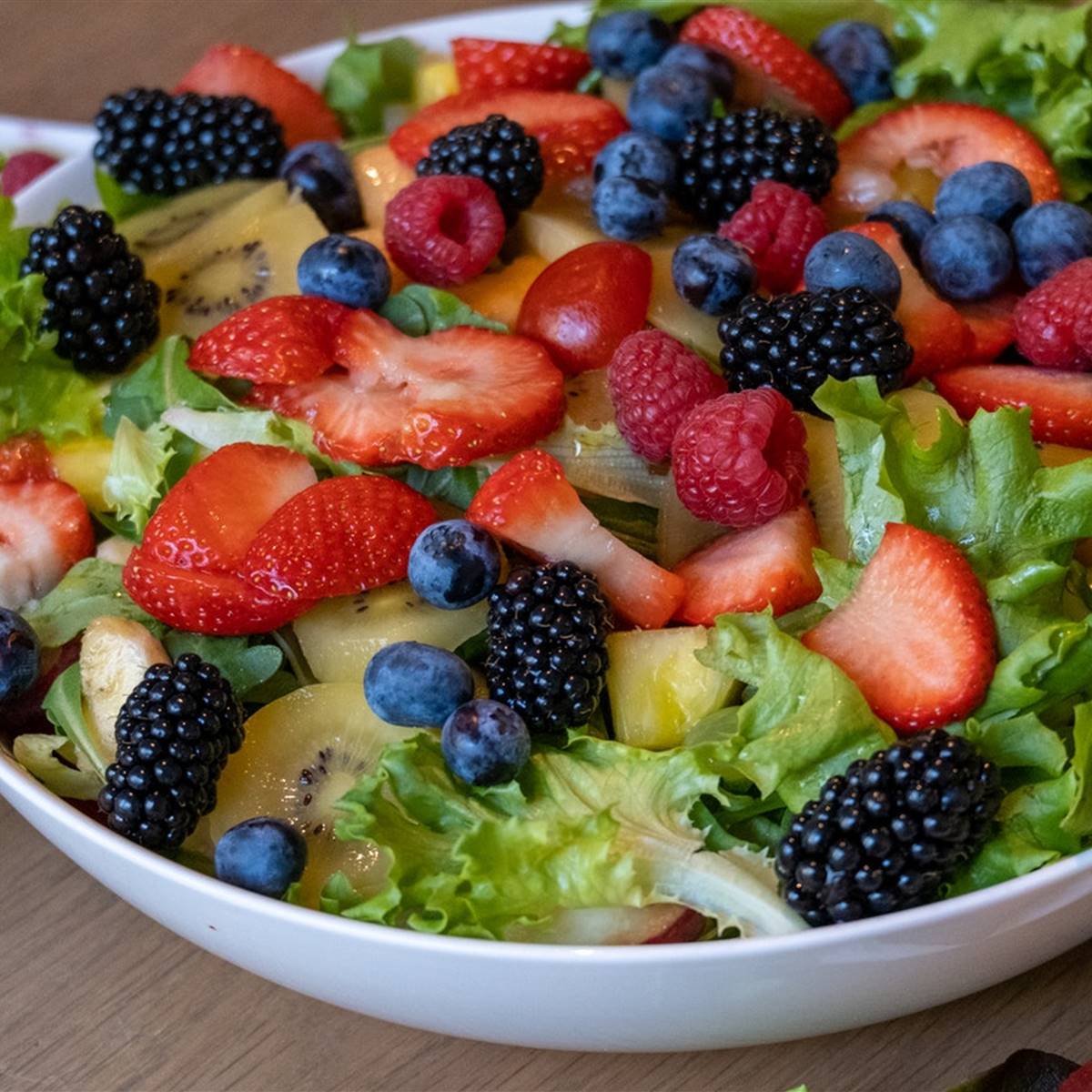
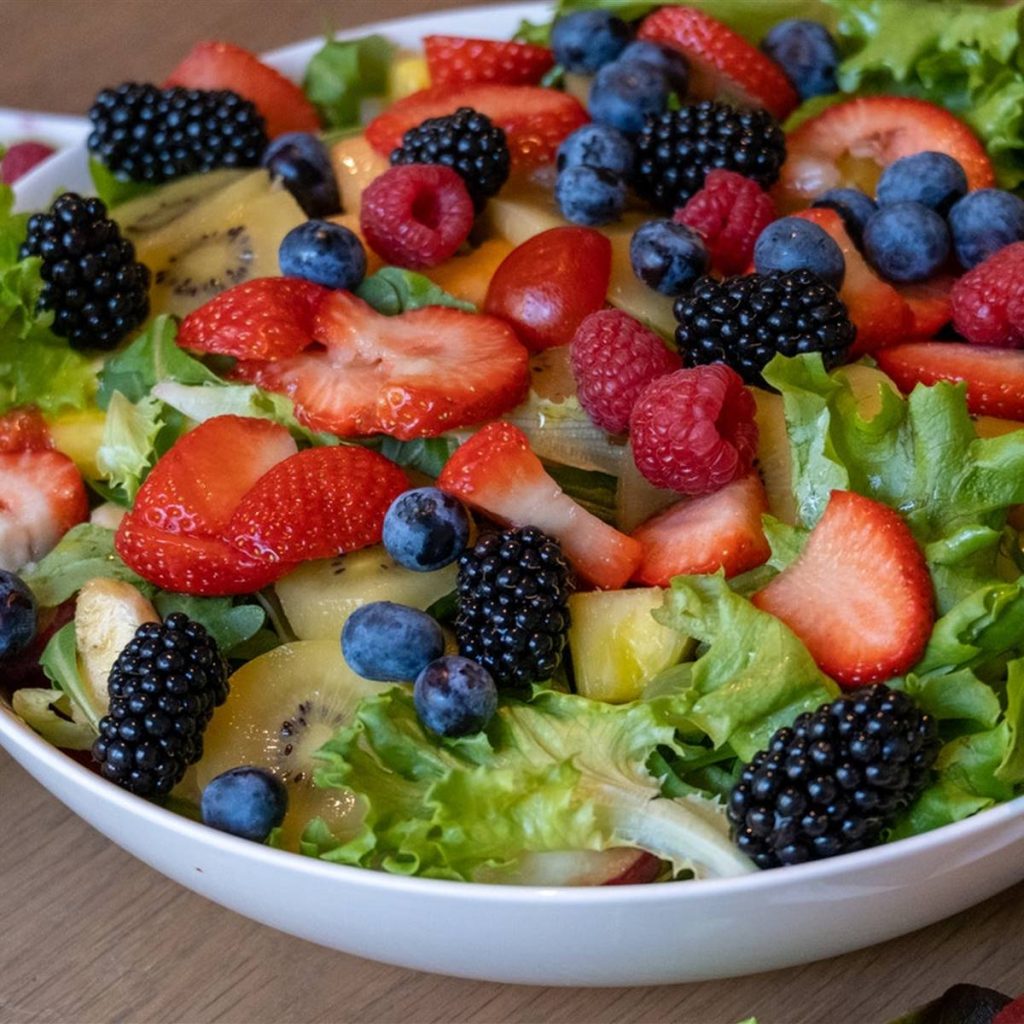
Seasonal fruit salads are very appetizing. In addition to enriching them with their vitamins, they fill them with freshness and flavor. Which ones combine best?
- A good base: the key to every salad
- The best fruits for salad (and how to combine them)
- How to dress a fruit salad
- Tips and tricks to prepare the perfect fruit salad
Fruits abound in the markets and seduce with their reds, oranges, greens or yellows. Tasty and juicy, sweet or sour, but always refreshing, they offer an explosion of flavors and energy that does not have to be relegated to desserts.
A salad with fruits not only enriches the diet by providing good doses of vitamins and fiber but can be a deliciously surprising, refreshing and light way to start meals.
Each fruit is different, but including them in salads opens a wide range of gastronomic combinations: sour with sweet, strong and soft flavors, bitter and sour…
The fruits create contrasts with the rest of the ingredients. In addition, eating them in salad helps to complete the recommended daily servings of fruit and thus obtain essential nutrients for health without an excessive contribution of calories.
And it is that fruits are composed mainly of water (therefore they help to replenish liquids), simple sugars (responsible for their flavor and energy), fiber (which satisfies, purifies and regulates intestinal transit), vitamins (A and C especially), minerals (especially potassium and magnesium), antioxidants and some acids (such as citrus), and that being poor in fats and proteins.
To include them in salads you just have to have good ingredients, preferably organic fruits, wash them carefully, cut them at the last moment to moderate the loss of vitamins, combine them gracefully and season them with a vinaigrette or sauce that highlights their qualities.
This would be the abc, but let’s find out what are the most recommended combinations.
A GOOD BASE: THE KEY TO EVERY SALAD
Salads can be made with all kinds of leafy vegetables (lettuce, endive, spinach, arugula, watercress, lettuce, red chard …), with other vegetables (tomato, artichoke, celery, carrot, zucchini, cucumber, cabbage, pepper, green beans …), cereals (pasta, rice, quinoa, wheat, couscous, bulgur …), legumes or potatoes.
In all these cases the fruit does not have to overcome the base, but has to be a complement. In other salads the opposite may be intended: to dress a fruit base to which some salty ingredients serve as a garnish.
Both in one case and in another the fruit must be ripe, so that it offers all its flavor and qualities.
The usual thing is also to use it raw to take advantage of its nutrients, but it can be cooked slightly, especially if it is not at its point of ripeness or sweetness.
If desired, pineapple can be caramelized, apples sautéed and flambear with cognac, and red fruits confit to give flavor and consistency to the dressing.
THE BEST FRUITS FOR SALAD (AND HOW TO COMBINE THEM)
Some fruits are traditionally used in salad: orange is accompanied by tomato, onion and cod in Andalusia; The apple is combined with cheese and nuts, and the pineapple stars in numerous tropical salads.
But you can go further and prepare suggestive salads with pears, strawberries, melon, mango, papaya, kiwi, peaches, figs, grapes, currants, blackberries, cherries …
Almost any fruit can be part of a salad. You just have to know how to combine it to enjoy it with all its flavor and nutrients.
- Berries. They enrich salads with their antioxidants.
- Strawberries combine with couscous, avocado, lettuce, spinach, watercress and soft cheeses; Also, with tomato and lentils.
- Currants hit salads with intense and salty flavors.
- Blackberries, more delicate, are friends of canons and soft cheeses.
- Citrus. They lighten the salad and enhance the sweetness of other fruits.
- The oranges are exquisite with onion and black olives, or with endive, arugula or chicory.
- Lemons are an excellent dressing.
- Limes combine with spicy flavors.
- The pink grapefruit matches the avocado.
- Chinese tangerines are very showy in leaf salads.
- Tropical fruits.
- The pineapple gives freshness to rice or pasta salads and combines with tofu and green beans.
- The mango triumphs in fresh cheese salads, seasoned with lime and spices.
- Papayais excellent with cilantro.
- Passion fruit gives an acid point to a vinaigrette.
- Coconutis ideal for Asian salads, raw, in shavings or in the form of coconut milk.
- And kiwigives color to the fruit salad and can be marinated with strawberries.
- Pomegranates. They perfume and brighten the salad, especially if it is bitter leaf.
- Figs. Strong cheese and Modena vinegar suit them.
- Apples. Ideal for salad, although it is advisable to sprinkle them with lemon to prevent them from oxidizing. A good mix is apples, endives and carrots seasoned with lemon juice, chives, oil and sesame. They can be used cooked and crushed as a dressing with olive oil.
- Peaches. Exquisite with mint and almonds. Also, nectarines.
- Melon. It is delicious in crispy green leafy salads with a strong flavor seasoned with red fruits. It also gets along well with cucumber, or feta cheese. The cantaloupe melons, in addition to splashing the orange salad give it a sweet and delicious flavor.
- Pears. Exquisite with mushrooms and strong cheeses: blue, parmesan, pecorino…
- Watermelon. Combine with tomato, feta cheese and broad beans; It must be very firm.
- Grapes. With apple and in salads with cheese. They can peel or blanch without losing texture.
HOW TO DRESS A FRUIT SALAD
The dressing can enhance the flavor and texture of the fruit and other ingredients in the salad. Find out how to choose the right one.
- Vinaigrettes.
- Olive oil triumphs in most cases, although in tropical or Asian salads sunflower oil is more common.
- Modena vinegar combines with red fruits, cantaloupe, peach, pear and orange.
- Apple cider vinegar is milder, ideal for strong-tasting salads.
- Another option is a vinegar of red fruits or citrus.
- Juices. Citrus, grape and pineapple juices mixed with mayonnaise, oil or yogurt give a good dressing.
- The lemon accentuates the flavor of papaya.
- The orange, strawberry and is excellent in carrot and nut salads.
- A honey dressing with lemon, orange and grape juice, salt, pepper and olive oil is excellent for apples, pears and carrots.
- Aromatic plants.
- Parsley enhances the flavor of orange.
- Mint matches strawberries and peaches.
- Coriander, with tropical fruit.
- Basil suits strawberries well.
- Chives, oranges, melons and apples.
- Dill combines with oranges, figs and tropical fruits
- The sage, with the peach.
- Seeds. Nuts and seeds enrich salads with fruit with their proteins and fats.
- Yogurt sauces. Suitable for red fruits and apples. You can also use seasoned liquid cream or soy cream, strong flavor.
TIPS AND TRICKS TO PREPARE THE PERFECT FRUIT SALAD
- Acidic and sour fruits such as pomegranate, lime or lemon enhance the flavor of other softer foods, even other fruits lacking sweetness, while sweets give salads a sweet and sour nuance.
- The skin of the melon or watermelon split in half and emptied serve as a container for salads. It is mixed, for example, watermelon with lettuce, heart of palm, ham and basil; Let it cool and season with lemon, mayonnaise and mustard.
- Fruit salads should be served cold, but once peeled the fruit should be consumed immediately. It is best that the ingredients are very cold before starting to prepare them.
- The way to cut the fruit will depend on the rest of the ingredients. It can be cut in its natural way, in sheets, dice or strips. A thin and wide cut gives more volume. A small cut allows better integration of flavors.
- Fruits that blacken when oxidized must be sprinkled with lemon.